Before You Buy Another Menopause Supplement, Ask These 5 Questions
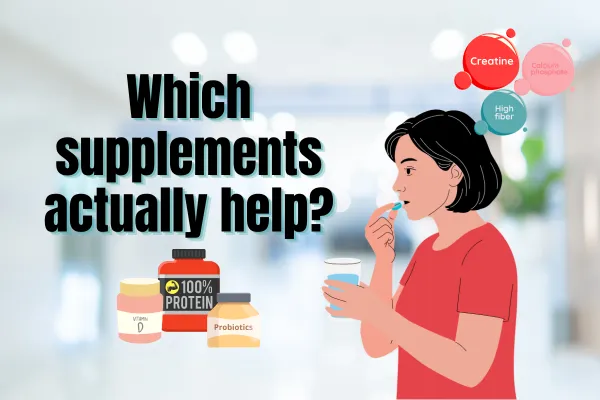
You went looking for help with one symptom. You came back with magnesium, creatine, collagen, a probiotic, an adaptogen blend, electrolytes, vitamin D, and two things you can't pronounce, and your cart total is $187.
I know how that happens. You're tired, your sleep is off, your body has changed the rules without sending the new manual, and every expert online has a different list of what women over 40 absolutely must be taking. Buying something feels like doing something, and doing something feels better than lying awake at 2 a.m. running inventory on yourself.
Supplements have a real place in a woman's health plan. I use them. But menopause is not a nutritional deficiency, and a product trending on Instagram is not automatically the product your body needs. Here are the five questions I want between you and the Add to Cart button.

1. What specific problem am I expecting this to solve?
Not "is this good for menopause." That question has no answer. Ask what you're taking it for. Better sleep? A deficiency somebody actually documented? Digestive symptoms? Bone health? A nutritional need you keep missing through food?
"Supports women over 40" is not a problem. "Menopause support" is not a problem. Even "energy" is too vague to evaluate, because if you're exhausted from sleeping five hours a night, an energy blend mostly buys you a very expensive urine collection project. And if you're tired because of something that deserves a workup, a supplement can quietly become the reason you never get one.
Stop shopping for solutions before you've named the problem.
2. Is there real evidence for this ingredient and my concern?
A product can contain an ingredient that's been studied without that product having been shown to do what the label implies. Those are different claims and they get blended on purpose.
So look past the testimonials and ask: has this ingredient been studied for the outcome I care about, in people like me, at a dose comparable to what's in this bottle, for a length of time that matters? Is the evidence consistent, or is a large claim balanced on one small trial?
Watch the verbs, too. Supports, promotes, and helps maintain are doing legal work, not clinical work.
One thing many women don't know: dietary supplements in the US don't go through FDA premarket approval for safety and effectiveness the way prescription drugs do. That's not a reason to panic, and it isn't a claim that supplements don't work. It means the burden of evaluation sits with you. Sold in a store and proven to help me are not the same sentence.
3. Could this interact with something I'm already taking?
This is where the word natural gets far too much credit. Supplements contain biologically active ingredients, and active means capable of doing something, including things you didn't mean to order. Some interact with prescription and over-the-counter medications, with each other, with lab results, and with surgery.
Make an actual list. Prescriptions, OTC medications, vitamins, minerals, herbs, powders, gummies, and yes, that sleep thing your friend swore by and handed you in the church parking lot. Then take the list to your pharmacist, who will do this for free and is extremely good at it.
This matters most when you're taking several products at once, because doubling up is easy when the ingredient is buried in three different blends. Your body doesn't care that the B6 arrived in three bottles. It adds them up anyway. My mother-in-law was getting three times the recommended daily dose of vitamin D3 before I went through her list. It was added to several different supplements she was taking and she had no idea how much total D3 she was ingesting. Guess what one of the symptoms was? Memory issues! It was hard to know what was a side effect and what was related to her dementia progression.
4. Am I using a supplement to avoid a bigger pattern?
Here's where we leave the supplement aisle and walk into my actual lane.
Say you're taking something for energy. You're also going to bed at midnight and getting up at 5:30. Skipping breakfast. Working through lunch. Saying yes when everything in you is saying no. Carrying the emotional logistics for four other people. Running on coffee until your body starts filing complaints.
The supplement may help a little. But the question underneath it is where your energy is going, and no capsule answers that one.
This is why I care about patterns more than products. You can have excellent information and keep running the exact behavior that's draining you. You can know sleep matters and still refuse to protect bedtime. You can know you need protein and still feed everyone in the house but yourself. I knew all of it and spent six years anyway, collecting specialists and picking up a metabolic condition I'll manage for the rest of my life.
At some point information has done its job. Then somebody (preferably you) has to lead.
5. How will I know if it's working?
I wish more people paid attention to this question. Ignoring it is how you end up swallowing nine capsules at breakfast unable to say what any of them are for.
Decide in advance. What would improvement look like, specifically? What will you track? How long is fair before you judge it? When will you reassess with your clinician, and if nothing has changed by then, does continuing make sense?
There's also a practical reason to start one thing at a time. Change five variables at once and you've built an experiment that can't tell you anything. You don't have to run yourself like a clinical trial, but you should know why the bottle is on your counter.

Reading the label like a skeptic
If you and your clinician decide a supplement fits, turn the bottle around. Read the Supplement Facts panel, check the serving size, and know the actual amounts. Investigate proprietary blends, which exist largely so you can't tell how much of anything you're getting. Look into the manufacturer and whether they do third-party quality testing.
And when a product claims it will balance all your hormones, melt away weight, or cure menopause, that should wake up your critical thinking, not your credit card. (Menopause doesn't need a cure BTW. It's not a disease.) The FDA specifically warns consumers not to assume natural means safe, and to be skeptical of anything promising a quick fix.
So do menopause supplements work?
Too broad to answer. I've certainly found some that I find helpful! Some nutrients and supplements are useful for specific women with specific needs, and the evidence for individual ingredients varies a great deal by ingredient and by symptom.
That's the whole point. There is no single category called Menopause Supplements that every woman from 42 to 58 suddenly requires because her ovaries quit cranking out hormones. What you need depends on your history, what you're actually eating, your symptoms, your medications, your goals, and sometimes a clinical evaluation.
I'm not anti-supplement. I'm just against throwing everything at the wall because you're desperate to feel better, which is a different thing and, I'd argue, an expensive one. More products don't make a plan. Neither does more information. Eventually a woman has to decide what she's addressing, what she's trying, how she'll know if it helped, and when she'll look again. That woman is you.
Next: track the pattern before you buy the next thing
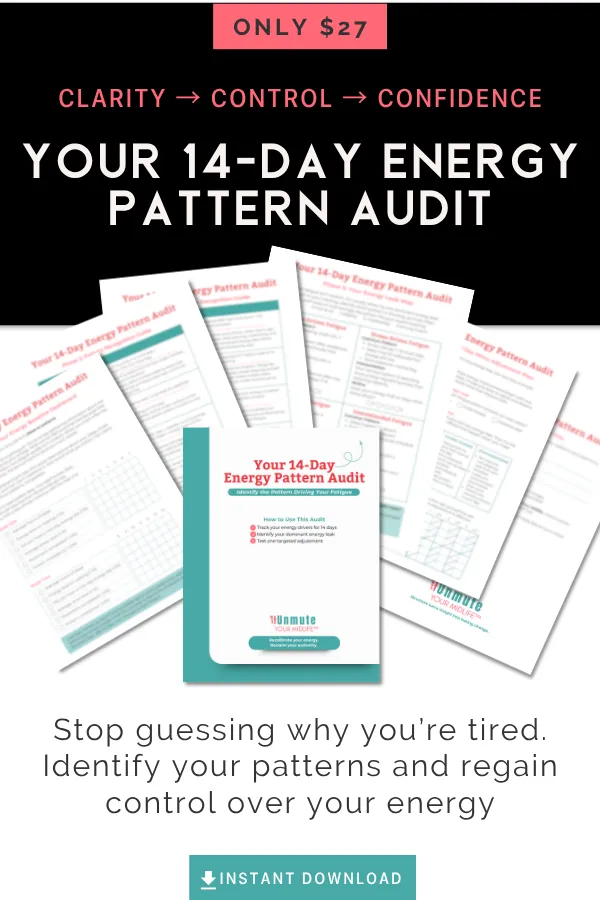
Before the next bottle promising energy, spend two weeks looking at the energy you already have and where it goes.
My 14-Day Energy Pattern Audit walks you through tracking it, so you're deciding from your own data instead of one terrible Tuesday or one confident stranger online.
Start the 14-Day Energy Pattern Audit: https://unmuteyourmidlife.com/energy-audit
This article is educational and isn't individualized medical advice. Dietary supplements can interact with medications, other supplements, and medical conditions. Discuss supplements with an appropriate healthcare professional or pharmacist, particularly if you take medications, have medical conditions, are preparing for surgery, or experience new or concerning symptoms.