

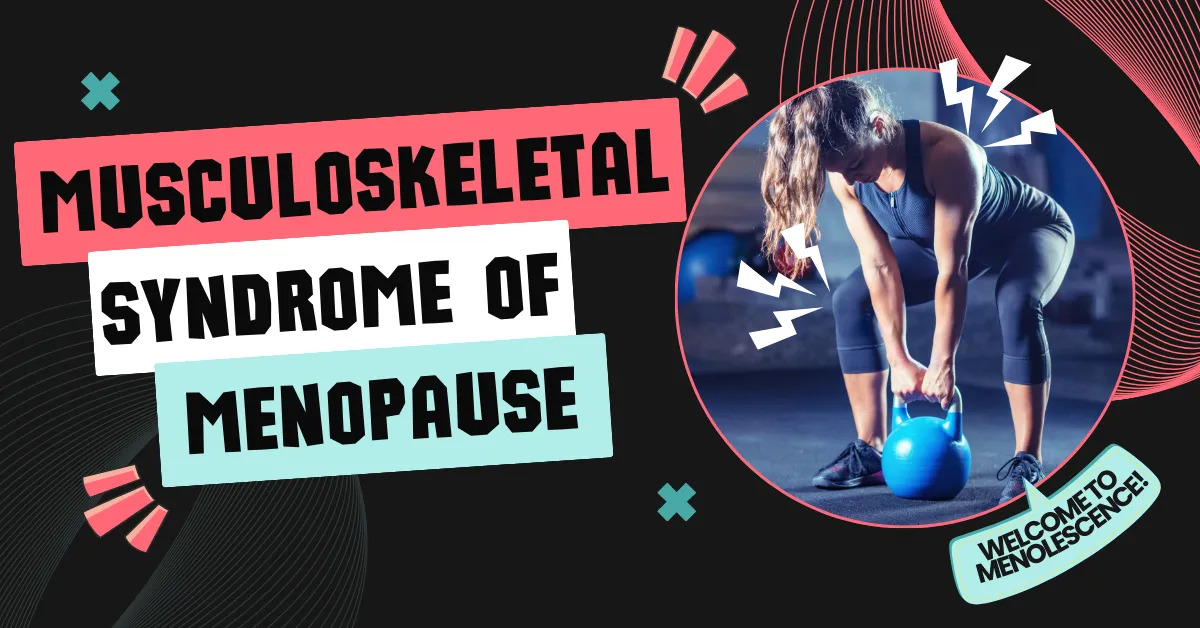
Why Your Joints Hurt & Your Back is Screaming: The Musculoskeletal Syndrome of Menopause
Sister, it might not be “just aging”... it could be Musculoskeletal Syndrome of Menopause. Sounds dramatic? Maybe. But it’s real, and it’s affecting way more women than we’re talking about.
You didn’t magically become fragile at 45. Your hormones, especially estrogen, play a HUGE role in keeping your joints juicy, your bones strong, and your muscles solid. And when those hormones start leaving the party during perimenopause or menopause, your whole body starts feeling it.
In today’s post, we’re diving into:
What Musculoskeletal Syndrome of Menopause even is
How to tell if you’re dealing with it
Simple, science-backed steps to protect your bones, joints, and energy for the long haul
You’ll walk away with a new level of understanding and a game plan that puts you back in control.
This fancy name basically means:
It includes:
Joint pain and stiffness
Back pain
Muscle aches
Loss of muscle mass (hello, squishy arms)
Fatigue after basic movement
Higher risk of osteoporosis or fractures
And it all comes back to one major player: estrogen.
Estrogen does more than manage your cycle. It helps keep:
Bones dense
Muscles strong
Joints lubricated
Inflammation low
So when estrogen starts packing its bags during perimenopause and menopause, you might start feeling like your body's falling apart—even if your workouts haven’t changed.

Ask yourself:
Are your joints stiffer in the morning than they used to be?
Does your back hurt more often—for no reason?
Are stairs starting to feel more like mountains?
Have you noticed more creaking, cracking, or random aches?
Are you losing strength or energy faster than you used to?
If you said yes to even 2 of those... this blog is for you.
Good news: this is not a life sentence.
Your body’s asking for support. Let’s give it some.
Muscle loss speeds up after 40, but you can fight back.
Lift weights (yes, even light ones!)
Use resistance bands
Focus on bodyweight moves like squats, pushups, and lunges
Start slow. Progress gradually. This isn’t about bulking—it’s about staying strong, mobile, and independent. (I promise! You'd have to add in some steroids, a TON of protein, and some really heavy lifts to build hulkish muscles! You're not going to lose your femininity with basic strength training.)
Protein is non-negotiable in midlife.
Aim for 20–40g per meal to preserve muscle and fuel repair.
Also focus on:
Calcium-rich foods (leafy greens, almonds, fortified plant milks)
Magnesium & Vitamin D (bone support + energy)
Anti-inflammatory foods (berries, omega-3s, olive oil)
Fueling right is half the battle.
No healing happens when you’re running on fumes.
Sleep is when your body repairs tissues, regulates hormones, and resets inflammation‼️
Protect your 7–9 hours like it’s your job:
Wind down early
No screens an hour before bed
Use magnesium, a sleep mask, or white noise if needed
Want help with this? I’ve got a free Sleep Guide.
If your symptoms are loud, it might be time to explore:
HRT (Hormone Replacement Therapy)
Targeted supplements like collagen, creatine, or omega-3s
Bone density scans (DEXA) for baseline data
Midlife doesn’t mean giving up, it means getting smart.
Even gentle movement keeps your joints mobile and your brain happier.
Go for short walks
Stretch daily
Try yoga, pilates, or water aerobics
Movement is medicine and your body was built to move, even now.
Listen, friend—your body isn’t broken. It’s just asking for a new kind of care.
Musculoskeletal Syndrome of Menopause is real, and it’s common. But that doesn’t mean you have to settle for stiffness, weakness, or pain.
Now that you know what’s really going on, you can take small, smart steps to protect your bones, strengthen your muscles, and keep your body moving with power and ease.
It’s not about going back to the body you had at 25. It’s about building strength, energy, and confidence for the season you’re in.

If you’re nodding along like, “YEP, that’s me,”
👉 It’s time to schedule an Unmute Session.
We’ll talk about what your body’s telling you, walk through your symptoms, and create a customized plan so you can feel strong, clear, and supported through midlife and beyond.
Book your call now 👉 Unmute Session
Let’s get you back in the driver’s seat of your health. 💪