Bloating After Eating in Menopause: Test This First
Let's do some imagination time travel. It's 4:30 on Thanksgiving afternoon. The dishes are stacked in the sink and you're standing in the pantry with the door half closed, undoing the button on your jeans and wishing you'd worn your stretchy pants.
Here's the plain answer to the question you're thinking in that pantry. Bloating after eating is one of the most common gut complaints in perimenopause and menopause, and it usually comes from a stack of things at once: shifting hormones that change how your gut moves, meals that are bigger and richer than your body is used to, eating fast, stress, and sitting still afterward. In a UK study presented at The Menopause Society's 2025 Annual Meeting, 77% of nearly 600 women aged 44 to 73 reported bloating, and 82% said their digestive symptoms started or got worse around perimenopause or menopause.
You didn't even eat that much. One plate and a sliver of pie. Two hours later your stomach feels like a pool floatie somebody overinflated, and you're wondering why a meal you've eaten for thirty years suddenly lands like this.
Thanksgiving is one week away. That's enough time to stop guessing and run a small experiment on your own body, so the holiday plate becomes information instead of a punishment. By the end of this post you'll know why your gut reacts differently now and exactly what to test before the turkey comes out.
Your gut didn't get the memo either
They talk about estrogen and progesterone like they only run your cycle and your mood, but if you've been following me long you know I've talked about the MANY roles they really have. They also have a say in how fast food moves through your digestive tract and how much fluid your body holds onto. When those hormones start swinging in perimenopause, plenty of women notice slower digestion and a belly that looks very different at 8 p.m. than it did at 8 a.m.
That last detail matters. Bloating comes and goes. It tends to show up after meals and feels tight or pressured. Midlife weight gain is slower and steadier, and it doesn't vanish overnight. If your waistband is a different size at breakfast than at dinner, you're most likely looking at bloat.
Constipation often rides along with it, too. In that same study, more than half the women reported constipation, and a backed-up gut has nowhere for gas to go. If you've been feeling puffy and heavy all over, my post on the lymphatic system and that stuck feeling is worth a read alongside this one. And if your skin has been as cranky as your stomach, the gut and skin connection may explain why.
The holiday table stacks every trigger at once
As a nurse, this is my stance: hormones are part of this story, but they are rarely the whole story. Look at what a typical holiday meal asks your gut to handle in a single sitting.
Portions are bigger than any other day of the year. The food is rich and salty, and fat slows the rate your stomach empties. There may be alcohol, or a fizzy drink, and wine has a way of hitting harder after 40 (I wrote a whole post on what alcohol does to your midlife hormones and sleep). Then think about how you eat it. If you're the one hosting, you're probably eating standing up and getting up every four minutes to refill something with a nervous system that's been running in fight or flight since 6 a.m.
A stressed body puts digestion on the back burner. That's just biology. Add a two-hour nap on the couch right after the meal and your gut gets very little help moving anything along.
So at 4:30, skip "what's wrong with me?" and ask which of those levers you pulled. But don't feel guilty. Most of us pulled all of them right along with you.
A one-week experiment to run before Thursday
You don't need a cleanse or a cabinet full of bloating supplements (if you're tempted, read these five questions before you buy another one). You need a week of paying attention. Start today.
Write down your bloat every day for seven days. Note things like when it showed up, what you ate, how fast you ate it, whether you'd had a bowel movement, and your stress level from zero to ten. You don't have to be scientific and include all of those details, but you're looking for a pattern. Also, don't grade yourself or feel guilty. Symptoms are signals...not accusations.
Slow down the first ten minutes of your biggest meal. Sit down and set your fork on the plate between bites. Fast eating and talking through meals mean more swallowed air, and swallowed air is a common source of upper belly bloat.
Walk for 10 to 15 minutes after your largest meal. In a small randomized trial of 94 adults with functional bloating, people who took short walks after meals for four weeks reported less bloating and fullness, and on the post-meal fullness score walking beat a prokinetic medication. Ten minutes around the block counts. If you have fur babies they will be ecstatic to join you!
If constipation is part of your pattern, drink more water and add soluble fiber slowly, like oatmeal or ground flaxseed, which the NHS bloating guidance also suggests. A word of caution though! Going from zero to a giant fiber smoothie overnight will make things worse before they get better.
Then on Thanksgiving Thursday, use what you learned. Pick your true favorites, take a smaller first plate, eat it sitting down, and go for a walk before pie instead of a nap after the meal. Bring someone with you.
And if the bloat comes from the second helping you didn't want.. that extra plate you ate because saying no felt rude... that's a pattern too. Drop that moment into the free Mute Point Tool and it will hand you back the right words for next time.

When bloating is worth a phone call
I'm not here to scare you, and most post-meal bloating is the ordinary, uncomfortable kind. But your body is allowed to get checked when something feels off. The NHS recommends seeing a doctor if you're bloated regularly, if diet changes haven't helped, or if bloating comes with unintentional weight loss or blood in your stool. Sudden severe belly pain, vomiting, a new lump or swelling, or being unable to pass gas or stool needs care quickly.
There's one more number from that Menopause Society study that stuck with me. About half the women had asked a professional for help, and 58% of them felt the support they got wasn't adequate. That's exactly why your seven days of notes matter. "I'm bloated a lot" is easy to brush off. "I'm bloated within an hour of my biggest meal five days out of seven, I haven't had a normal bowel movement in three days, and this started two years ago" gets a very different conversation at the doctor's office.
Back to the pantry
Go back to that woman standing in the pantry with her button undone. Next week she could be the one walking around the block while the turkey settles, with a week of notes that tell her what her gut actually responds to. The holiday stays the same. The difference is a body she understands a little better and a skipped belly ache.
I learned this lesson the slow way. Ha! When I finally got serious about feeling like myself again in midlife, my first move was changing jobs, which is about as unglamorous as a wellness plan gets. I needed enough control over my calendar to sleep and eat like a woman with a body to run. Hormones, gut health, and movement came after that. It really does go in order, and every nurse who ever sat through a lecture on Maslow knows you can't skip the basics and expect the rest to hold.
Your gut is giving you data. Collect it and then decide what to do with it.
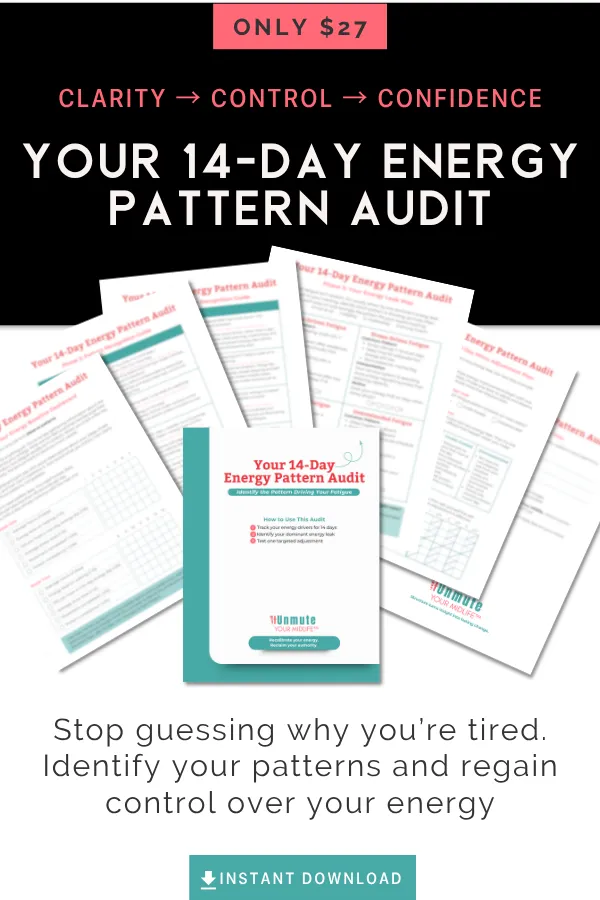
Want to see your own pattern on paper? The 14-Day Energy Pattern Audit gives you a daily tracker, a pattern recognition guide, an energy leak map, and a 3-day micro-adjustment to test first, in about 10 minutes a day.

This article is for educational purposes and isn't individualized medical advice. New, persistent, severe, or concerning symptoms should be discussed with a qualified healthcare professional.
TL;DR
Why do I get so bloated after eating in menopause?
Shifting estrogen and progesterone can change how quickly food moves through your gut and how much fluid you hold onto. Layer on bigger meals, eating fast, stress and less movement, and you get the after-dinner balloon. Most women have more than one of these going at once, which is why tracking beats guessing.
How can I tell menopause bloating from weight gain?
Bloating moves. It shows up after meals and your belly can look different from morning to night. Weight gain builds slowly and stays put. If your pants fit at breakfast and not at dinner, that's bloat.
Does walking after a meal really help with bloating?
For a lot of people, yes. A small randomized trial found that short walks after meals for four weeks reduced bloating and fullness in adults with functional bloating. Start with 10 to 15 easy minutes after your biggest meal and see what your own notes say.
When should I talk to my doctor about bloating?
Make the appointment if you're bloated most days, if changing your eating hasn't helped, or if bloating comes with weight loss you didn't try for or blood in your stool. Severe sudden pain or being unable to pass gas or stool needs prompt care. Bring your notes so the conversation starts with facts.