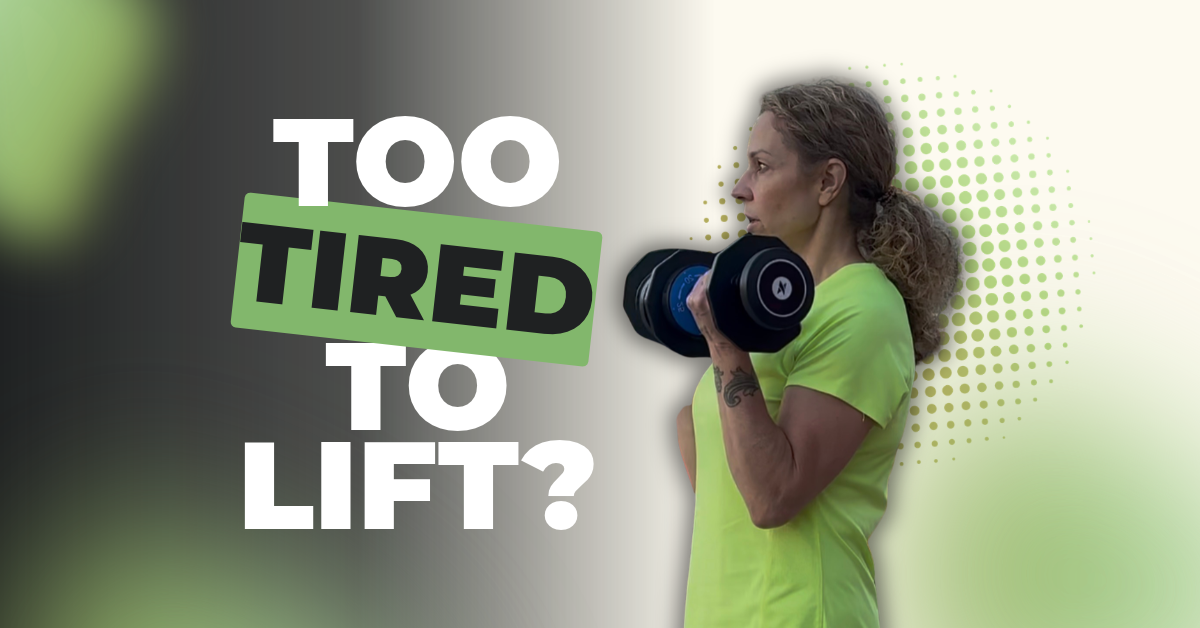
Too Tired to Lift? Strength Training in Perimenopause
What usually happens when morning rolls around? The alarm goes off at 5am and you lie there doing math. Two dumbbells sit in the corner of the bedroom, one of them holding up yesterday's socks. You slept badly again, and the idea of lifting anything heavier than your coffee mug sounds like a joke someone else is telling.
Here's the plain answer. Yes, you can start strength training in perimenopause even when you're tired. Tired is a reason to start smaller, not a reason to skip. Ten to fifteen minutes, two days a week, with moves you can do in your kitchen, is a real beginning.
By the end of this post you'll have a ten-minute routine for a tired day and a way to tell when the tiredness needs a bigger conversation than a workout can give it. (Note, this is a beginner-friendly plan so if you're already actively participating in a fitness routine this may not be new information for you).
Waiting for energy is a trap
Most of us carry a quiet rule: I'll start once I have the energy. Except energy doesn't arrive on schedule, and in perimenopause it arrives even less often. As I wrote in my post on ditching the all-or-nothing mindset, you weren't REALLY going to get up early. I wouldn't!!
So let's reframe the plan until it fits a bad day as easily as it would a good day. The Exercise is Medicine program from the American College of Sports Medicine suggests that anyone who tires easily should start with 10 to 15 minutes in the morning and evening, then build up as it feels comfortable. (That is a workout you can finish before your coffee gets cold.)
I won't promise a session will flood you with energy. You can start small and build up to those energizing type of sessions. What I will say is that a session you finish teaches your brain a different story than a session you skipped.
A ten-minute session for a tired day
Set a timer for ten minutes. Spend a slow minute or two on each of these, and rest whenever you need to:
Sit to stand from a sturdy chair, lowering yourself as slowly as you can.
Wall push-ups, with your feet a step back from the wall.
Rows with a loaded backpack or a jug of water, hinged at the hips with a flat back.
Glute bridges on the floor or on your bed.
Then stop. Stopping is part of the plan. When it feels easy, add weight before you add minutes. I am a fan of heavier weights for fewer reps over tiny dumbbells for dozens, which I covered in my midlife movement post. If a move makes you dizzy or brings on chest pain, stop and call your doctor before trying it again.
Muscle and joint complaints tend to pick up around this stage of life, and I walked through why in my post on the musculoskeletal syndrome of menopause. That is a good reason to get the strength part going now.

Starting late still works
The research is kinder than the internet. A 2026 meta-analysis in the Journal of Science and Medicine in Sport pooled 126 studies and 4,019 women, with an average age near 51 and about two thirds of them postmenopausal. Resistance training improved strength in both groups, and the gains did not differ significantly by menopausal status. The CDC says adults need at least two days a week of muscle-strengthening activity, so your ten minutes counts toward a real target.
Timing matters too. In the SWAN study, bone loss accelerated in late perimenopause and continued at a similar pace in the first postmenopausal years. That is useful to know when you are deciding whether this is the week you're finally going to start. Hormones are not the whole story, and that is my favorite hill to stand on. The pieces you control actually have a huge impact: sleep, food, load on your muscles, and how many things you agreed to this week.
When the tiredness needs a different conversation
Strength training is a good tool but a poor detective. If you're exhausted most days or noticing new symptoms, that deserves a clinical conversation, and a normal lab result does not always settle it. I wrote about that in My Labs Are Normal, But I Don't Feel Normal. As a nurse, I would rather you ask early than push through. As it happens, this week's podcast episode was about fatigue so take a look if you're struggling with fatigue.
If you decide to schedule an appointment with your clinician, you'll get a better outcome if you show up prepared. Keep a short log of your sleep, your workouts and a daily energy rating, and bring it with you. It gives your clinician something concrete to work with. I give a good example of what to track in the podcast episode mentioned above.

Back to those dumbbells in the corner
Remember that 5am alarm? In a second version of the morning, you leave those dumbbells where they sit. Instead, you do eight slow sit-to-stands from the edge of the bed, and then you go find the coffee. Movement works best when it is something you will actually do, even if it comes with an awkward story. Mine involves standing on a vibration plate during a conference call... I learned the hard way that a shaky voice is hard to explain to the other listeners.
This article is for educational purposes and isn't individualized medical advice. New, persistent, severe, or concerning symptoms should be discussed with a qualified healthcare professional.
TL;DR
Can I start strength training if I'm exhausted all the time?
Start with ten to fifteen minutes, two days a week, and stop before you are wiped out. If the exhaustion is constant or new, talk with your clinician too, because a workout cannot sort out what is causing it. Count each session as a small, repeatable win.
How often should I lift in perimenopause?
The CDC recommends at least two days a week of muscle-strengthening activity for adults. Two short sessions count. Add weight to increase the load before you add time to your workout.
Do I need a gym?
No. A chair, a wall, a backpack and a floor will cover the routine above. If you want eyes on your form, a trainer can help, and getting that early saves you from bad habits that can lead to injuries.
Will I bulk up?
Unlikely. Building large muscle takes heavy training and a large investment of training time. Ten-minute sessions will mostly leave you with more strength for stairs and groceries.